
The key difference is what happens when the temperature drops
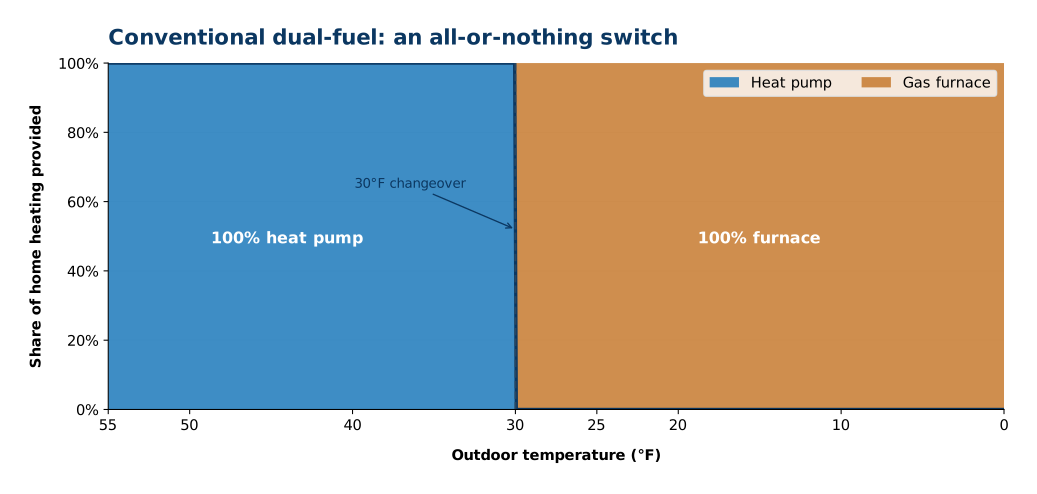
Conventional dual-fuel equipment pairs a heat pump with a gas furnace. At a chosen outdoor temperature—the changeover or lockout point—many systems turn the heat pump off and run the furnace instead. At that point, all space-heating energy comes from gas.
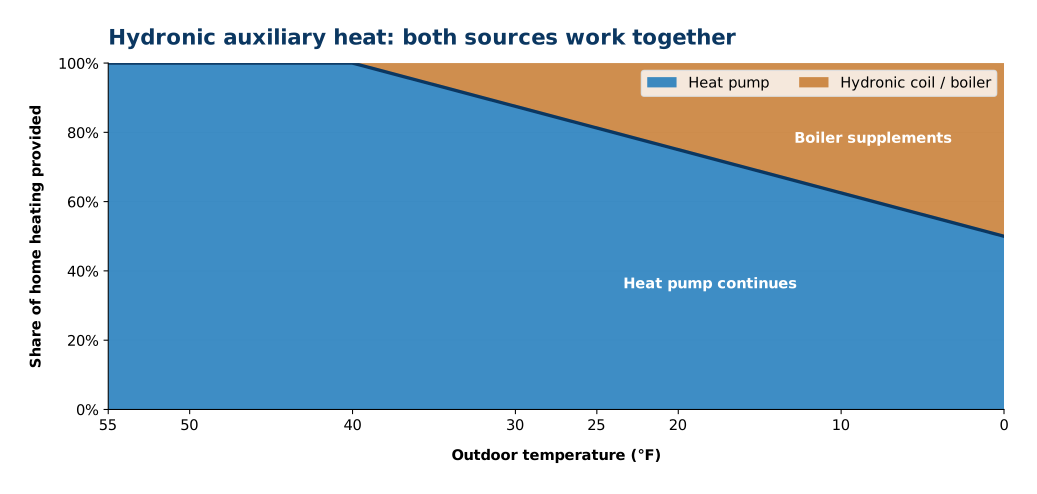
A hydronic auxiliary design works differently. An air handler contains a hot-water heating coil supplied by a gas-fired boiler. The heat pump continues working while the hot-water coil supplements its output when the house needs more heat than the compressor alone can provide. This can help preserve heat-pump efficiency without sacrificing comfortable supply-air temperatures.
Understanding capacity versus heating load
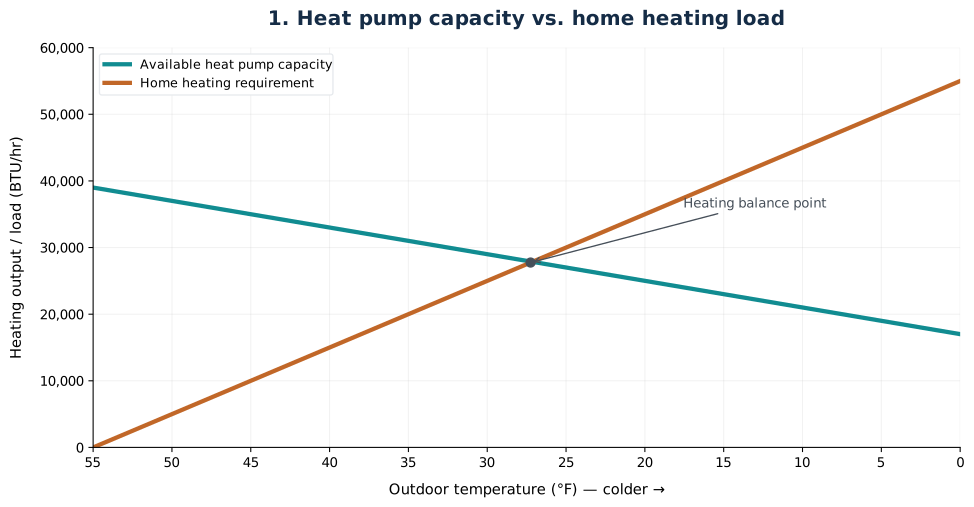
As outdoor temperature falls, a house normally needs more heat, while a conventional air-source heat pump's available heating capacity generally decreases. That doesn't mean the compressor stops producing useful heat. At temperatures around 25°F, properly selected heat pumps may still provide a substantial fraction of their rated output.
What conventional dual-fuel changeover does
For a conventional dual-fuel setup with a 30°F changeover, the furnace takes over below that setpoint. The compressor's contribution drops to zero—not because its heating capacity has reached zero, but because the controls have stopped calling for it. Actual changeover temperatures vary by equipment, building, local utility prices, and control configuration.
What hydronic auxiliary heating changes
With a compatible air handler, boiler, controls, and hydronic heating coil, the heat pump can remain on and contribute up to its available capacity. The boiler supplies the additional hot-water heat required to meet the remaining building load. The two sources supplement one another rather than forcing an all-or-nothing changeover.
Why it also changes equipment sizing
In a conventional application, selecting a larger heat pump solely to satisfy more of the winter heating load can leave the system oversized for summer cooling. A hydronic auxiliary strategy can allow the heat pump to be sized more closely to the home's cooling needs and cover the winter heating shortfall with a supplemental coil.
Modern variable-speed inverter heat pumps can change the equation: broad capacity modulation and improved low-ambient performance can reduce the need for supplemental heating, and may make modest oversizing less problematic. Even with an inverter, equipment selection still needs to account for minimum output, humidity control, airflow, and the specific building load.
Does that mean it always costs less?
Not automatically. Whether a heat pump is cheaper to run than gas depends on its coefficient of performance (COP), electricity prices, fuel type and price, and the efficiency of the furnace or boiler. Propane commonly presents a different economic comparison than natural gas. Controls, coil placement, water temperatures, defrost strategy, and installation design also matter.
A well-designed hybrid system can preserve lower-cost heat-pump operation when favorable while delivering warmer air from the hydronic coil during cold weather. The objective is to optimize the whole system, not merely install the largest heating appliance available.